Fit, dimensions & layout
Choose the cloth size around the actual box. A 500 mm square is a starting example, not a universal fit. Use a scrap square or paper mock-up to check the diagonal reach and knot allowance. If you want a 500 mm finished square with a 10 mm double-fold hem, allow 20 mm per edge and start around 540 mm square.
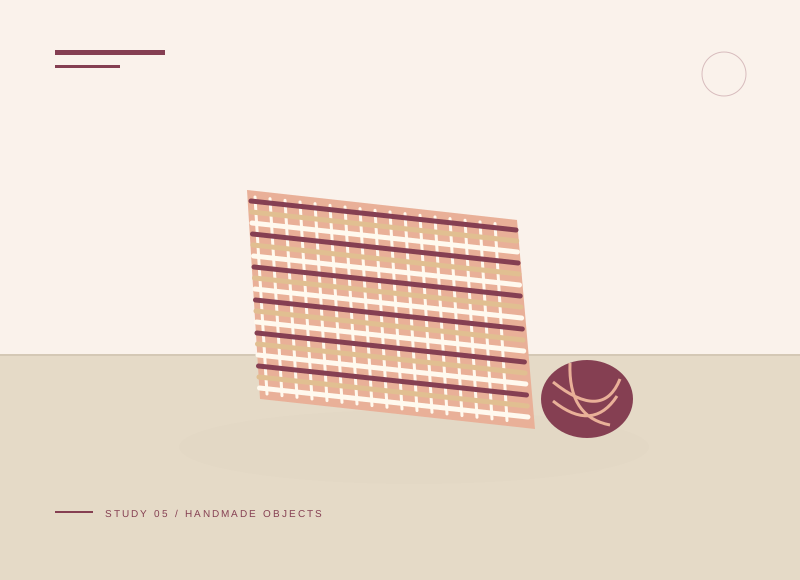
The illustration is a concept, not a scale drawing or a record of a tested build. Use a full-size template or dry fit to check the written layout with your actual materials.
Gather your materials
Tools to have nearby
Choose materials deliberately
Make it, step by step
Choose the cloth
Use soft washable fabric and prepare it according to its care instructions.
Square the cut
Measure a 500 mm square, allowing extra for a turned hem.
Check before moving onCheck both diagonals after squaring the fabric so a skewed cut does not create mismatched corners.
Finish the edges
Sew a narrow double-fold hem or use a hemming product exactly as directed.
Practice wrapping
Center a box diagonally, fold opposite corners over it, and tie the remaining corners with a square knot.
Check before moving onTie the wrap around a light practice box first and handle it over a table while checking it cannot slip out.
Add a note
Explain that the cloth can be reused. Keep it separate from unwrapped food.
Troubleshoot this project
Why will the corners not meet?
What to check. The box may be too tall or the square too small after hemming.
Next move. Try a larger mock-up or a smaller box, keeping enough cloth for a secure knot.
Why is the knot very bulky?
What to check. The fabric may be too heavy or the wrap may contain too many folded layers.
Next move. Choose lighter cloth and test the fold arrangement before finishing a full set.
The final check
The edges are finished and the box stays within the wrap.
Thin cloth drapes and knots more easily than upholstery fabric.
Record your actual sizes, material changes, and the result of your fit check in your project notebook. Keep the product name with any finish or adhesive sample.
Use a stable work surface and tools within your experience. Follow the exact tool and product instructions for preparation, dust control, ventilation, and cure. These decorative concepts have no structural load rating. Stop if the material or existing finish cannot be identified.